Half-day advanced workshop · Wednesday 11 November 2026

Enactment Focused EMDR

Working with what the protocol can't reach. Four hours on the relational patterns that keep playing after the memory is processed, and how to take them as EMDR targets. For EMDR-trained clinicians, from the hosts of the Notice That podcast.

In person in Springfield, MO or live on Zoom·12:30pm to 4:30pm Central·4 NBCC hours · EMDRIA Credits applied for·Worksheets included
$95, either room. 25 seats in person at 325 South Avenue, 50 on Zoom. EMDR Basic Training is required.
New to enactments? Start with the free article
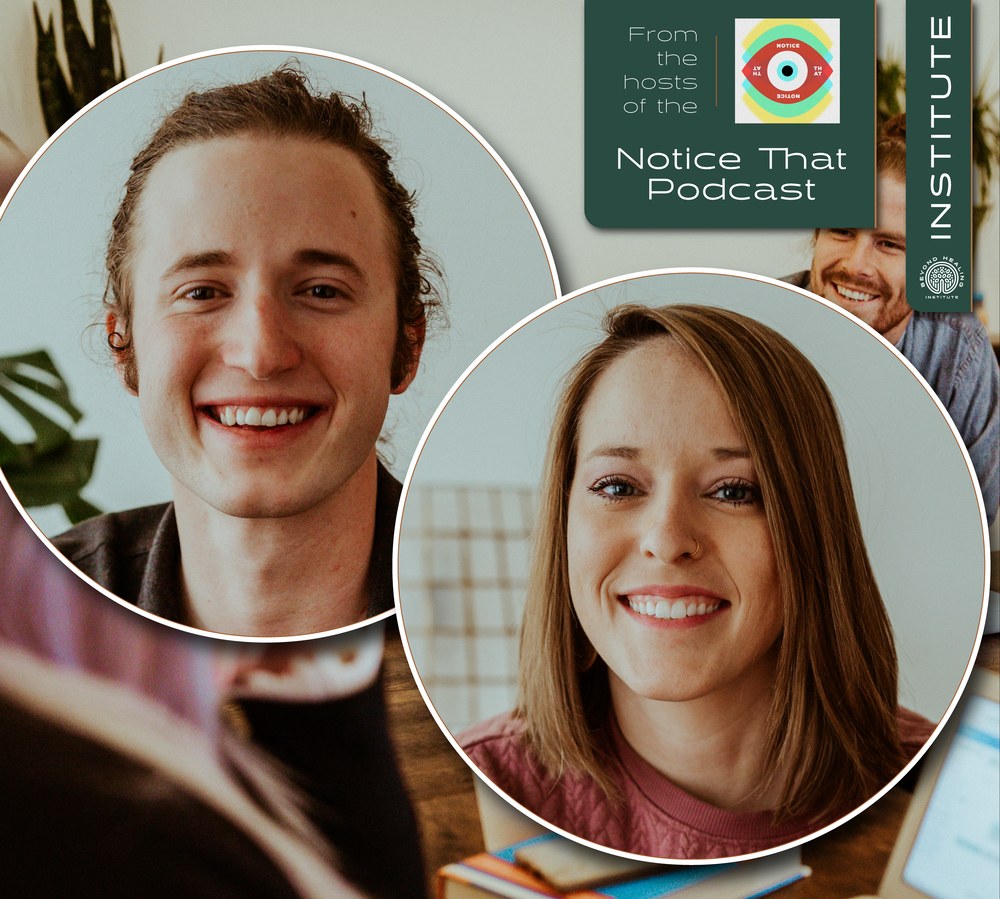
Bridger Falkenstien and Jen Savage, hosts of the Notice That podcast
The session you already know
The timeline is clean
0
SUD on every target.
Body scan clear.
  • "I still can't say what I need."
  • "I shut down every time we fight."
  • "Why do I feel invisible with him, even now?"

First, worst, most recent, all reprocessed. SUD at zero, VoC at seven, body scan clear. Good work, by any standard the protocol gives you.

Then she tells you about Tuesday night. He raised his voice and she went somewhere, the same somewhere, and said nothing for two days. She is not having flashbacks. She is not hyperventilating in the grocery store. She is shutting down when her partner gets angry, fawning at work, and playing the same relational role she has played her whole life. And some version of it is starting to play with you.

These are not unresolved memories. They are unresolved relational templates. The protocol orients you toward what happened. It has much less to say about what is still happening.

If you have closed a target and watched the pattern walk back in, you have been in this room.

The body keeps the score. Relationships tell the story.

The body carries the imprint of what overwhelmed us. It also carries the accumulated record of how other people responded to our needs, our differences, our attempts at connection. Over time that record becomes a relational template: what the nervous system expects will happen next, between you and anyone who gets close.

Those templates do not resolve at SUD zero. They come alive, in the marriage, at work, in parenting, and in the therapy room, where the client brings their history and so do you. EMDR has spent thirty years getting very good at the memory. Enactment Focused EMDR is about the space between the wounds, where the memory is still being lived.

Four hours on taking the space between the wounds as the target.
Register, $95, in person or online
What are enactments

An old relational template, alive in the here and now.

An enactment is not a projection and not a defense. Those words make it sound like the client is imagining something. An enactment is an embodied pattern, laid down by early attachment, that the nervous system expects will happen again, and that two people co-create in real time. Everything feels calm until something gets said and the room shifts: the client collapses, bristles, withdraws, performs. And just as suddenly you feel yourself pulled in, to rescue, defend, explain, prove. Enactments are not stories from the past. They are strategies in the present. They are built, layer by layer, out of three kinds of strategy.

Primary · the mask
Who I learned I must be

The first adaptive move: the curated, acceptable self a child builds to earn connection. Competent, invisible, selfless. Or chaotic, fragile, "the problem," when that was what held a parent's attention. Adaptive, and fragile.

"If I can be what they need me to be, they won't leave."
Secondary · distraction
When the mask strains

Being unseen, then exhausted, brings a point of intolerance: risk authentic expression, or retreat. Most nervous systems retreat into busyness, screens, caretaking, over-functioning, the manageable addictions. Pressure off, relationship intact, nothing exposed.

"It's not safe to show them what's really happening."
Tertiary · collapse
When nothing else works

Withdrawal, shutdown, despair, the escapes that stop buffering the relationship and start replacing it. This is where most clients arrive in therapy, and where, without this lens, we chase the symptom and miss the two layers underneath it.

"No matter what I try, it always ends the same."

When one person's layers meet another's, in a marriage, a friendship, a consulting room, that collision is the enactment. In Enactment Focused EMDR the collision is not resistance and not pathology. It is the target.

Free article · read before you decide
Enactment-Focused EMDR: Targeting the Space Between Attachment Wounds

Fourteen pages: where enactments come from, why memory processing alone does not change them, what the therapist's part is, and the in-session language for naming an enactment, linking it to the past, and setting it up as a target. It is the long version of this page, and it is free.

Download the PDF
PDF · 14 pages · no email required
What four hours cover

Four questions, taken in order

01
Why do some patterns outlive the memory?

What standard target selection orients us toward, what it leaves out, and why a clean timeline can sit beside an unchanged marriage. Not a critique of the protocol. A map of where it stops.

02
How does a strategy harden into an enactment?

The Cycle of Repression: concept of self, the mask, being unseen, exhaustion, the point of intolerance, distraction, collapse. Where it comes from in the relational, somatic and neurobiological literatures, and how to map it with a client.

03
How do you take an enactment as a target?

The same eight phases, pointed at what is happening now. Reciprocal dual attention, floatback as a posture rather than a technique, holding the present rupture and its historical echo together, and what to say to set it up.

04
What is your part in it?

Enactments are co-created, which means your strategies are in the room too. Noticing the pull in your own body, normalizing before you change anything, repairing in real time. The part of this work that no worksheet can do for you.

This is not a new protocol and it does not replace the one you have. It is a case conceptualization layer that lets you use EMDR wherever the nervous system is most alive right now, not only where the story began. You need EMDR Basic Training. You do not need to have heard any of this before. You do need a client whose pattern came back.

When
Wednesday 11 November 2026
12:30pm to 4:30pm Central
Central (Springfield, Zoom host time)12:30pm to 4:30pm
Eastern1:30pm to 5:30pm
Mountain11:30am to 3:30pm
Pacific10:30am to 2:30pm

One afternoon, four hours, with a break in the middle. The second half is practice: you work the worksheets on a case of your own, then we take questions.

Prerequisite
Completion of an EMDRIA-approved EMDR Basic Training. This is an advanced workshop and assumes fluency with the eight phases.
In person or online
325 South Avenue, Springfield, MO, 25 seats. Or live on Zoom, 50 seats. Same afternoon, same material, same worksheets.
CE
4 NBCC clock hours. An application for 4 EMDRIA Credits has been submitted and is pending approval; we will update this page when it comes back. Certificate issued after the live session, with presenter credentials and learning objectives.
Learning objectives

The six objectives submitted with the EMDRIA Credit application. They are what the certificate will state.

  1. Explain how a present relational enactment can inform EMDR case conceptualization within the Adaptive Information Processing model, including its relationship to historical experiences and current triggers.
  2. Differentiate primary, secondary, and tertiary protective strategies within the EF-EMDR formulation using a clinical example of each.
  3. Apply the Cycle of Repression framework to a case vignette to identify a relational expectation, a protective strategy, and a point for further assessment or intervention.
  4. Develop an EMDR treatment-planning example that links a specific present relational experience with relevant historical material and identifies a candidate target and a preparation resource.
  5. Identify at least three factors to assess before engaging enactment-related material in EMDR reprocessing, including client consent, capacity to maintain dual attention, and the state of the therapeutic relationship.
  6. Formulate a response to an in-session enactment that identifies a possible therapist contribution, acknowledges the protective function of the interaction, and invites client feedback and relational repair.
Register · $95, either room

Bring the pattern that came back.

One price, two rooms. Choose Springfield or Zoom in the form. Both are live, both earn the same CE, and both leave with the Clinician Companion.

Seats are capped so there is time to work your case: 25 in the room, 50 online. When a room is full it closes. EMDR Basic Training is required.

WorkshopWednesday 11 November · 12:30 to 4:30pm Central
$95
In person · 325 South Avenue, Springfield
25 seats
Live on Zoom
50 seats
4 NBCC hours · Clinician CompanionEMDRIA Credits applied for, pending approval
Included
Register online Register in person
Everything happens right here on this page: name, email, your room, then payment. Your confirmation, the calendar invitation and, for Zoom, the link follow by email.
What you take home

The Clinician Companion.

The worksheet packet we built for this work, with a worked example from start to finish. You use it in the room on Wednesday and with your clients the week after.

Worksheet 1
Primary Default Strategy

What made me, me. Early lessons in being "good." The mask I learned to wear. Ends in target and resource identification that maps straight onto Phases 1 and 2.

Worksheet 2
Secondary Distraction Strategy

A distraction strategy checklist, the cost of coping, and an authentic expression inventory: the moments the client risked saying something true, and what happened when they did.

Worksheet 3
Tertiary Tolerance Strategy

The last line of defense, and what sits beneath it. Built so collapse-level presentations become entry points for processing rather than symptoms to manage.

Worked example
All three worksheets, completed

A full composite case taken through every worksheet, so you can see what a finished one looks like before you hand one to a client.

The language
What to say in session

Scripts for naming the pattern, linking it to the past, setting up dual awareness, and repairing a rupture in real time. From the free article, expanded in the room.

Us
Your case, worked live

The second half of the afternoon is practice on a client of your own. Bring one whose pattern survived a clean timeline.

The companion is a clinical tool, not a diagnostic one. Every strategy in it is treated as what it was: a creative attempt to survive, connect, or matter.

From the hosts of Notice That
Bridger Falkenstien
Bridger Falkenstien
Co-founder, Beyond Healing Institute. Co-developer of Somatic Integration and Processing. Co-host of the Notice That podcast.
Jen Savage
Jen Savage
Beyond Healing Institute. Co-author of The Relational Thread. Co-host of the Notice That podcast.

We presented Enactment Focused EMDR at the EMDRIA conference this fall with Caleb Boston, MS, LPC, who developed the framework with us and co-authored the chapter and the worksheets. This afternoon is taught by the two of us: the same framework, the worksheets, and your cases.

Questions clinicians ask before registering
Do I need EMDR training?

Yes. Completion of an EMDRIA-approved EMDR Basic Training is required. The afternoon assumes you know the eight phases and have run them with real clients.

Is this a new protocol?

No. It is the same eight phases, pointed at what is happening now rather than only at what happened then. You will not learn a replacement for standard EMDR. You will learn where else it can be applied.

I already work attachment-informed, or with parts. Is this different?

It sits comfortably beside both. What it adds is a way of conceptualizing the live relational pattern, including the one between you and the client, as a processing target with its own setup, rather than as context around the target.

Is this SIP?

It is related. Somatic Integration and Processing is our broader case conceptualization model; Enactment Focused EMDR is the relational edge of it, applied inside the EMDR protocol. You do not need to know SIP to attend.

Does it count for EMDRIA Credits?

We have submitted this workshop to EMDRIA for 4 EMDRIA Credits and are waiting to hear back. We will say so here, plainly, as soon as it is approved, and registrants will be told either way before the workshop. The 4 NBCC clock hours are not in question; the certificate is issued after the live session.

In person or online, which is better?

Same afternoon, same material, same companion. In person at 325 South Avenue has 25 seats and the people in the room for the practice half. Online has 50 seats and your own desk. Pick the room you will actually show up in.

Bring the pattern that came back.

Wednesday 11 November · 12:30 to 4:30pm Central · Springfield or Zoom · 4 NBCC hours · EMDRIA Credits applied for
$95, either room. 25 seats in Springfield, 50 on Zoom. EMDR Basic Training required. Clinician Companion included.
In person · Springfield
Wed 11 Nov · $95 · 4 NBCC · EMDRIA pending
Register online